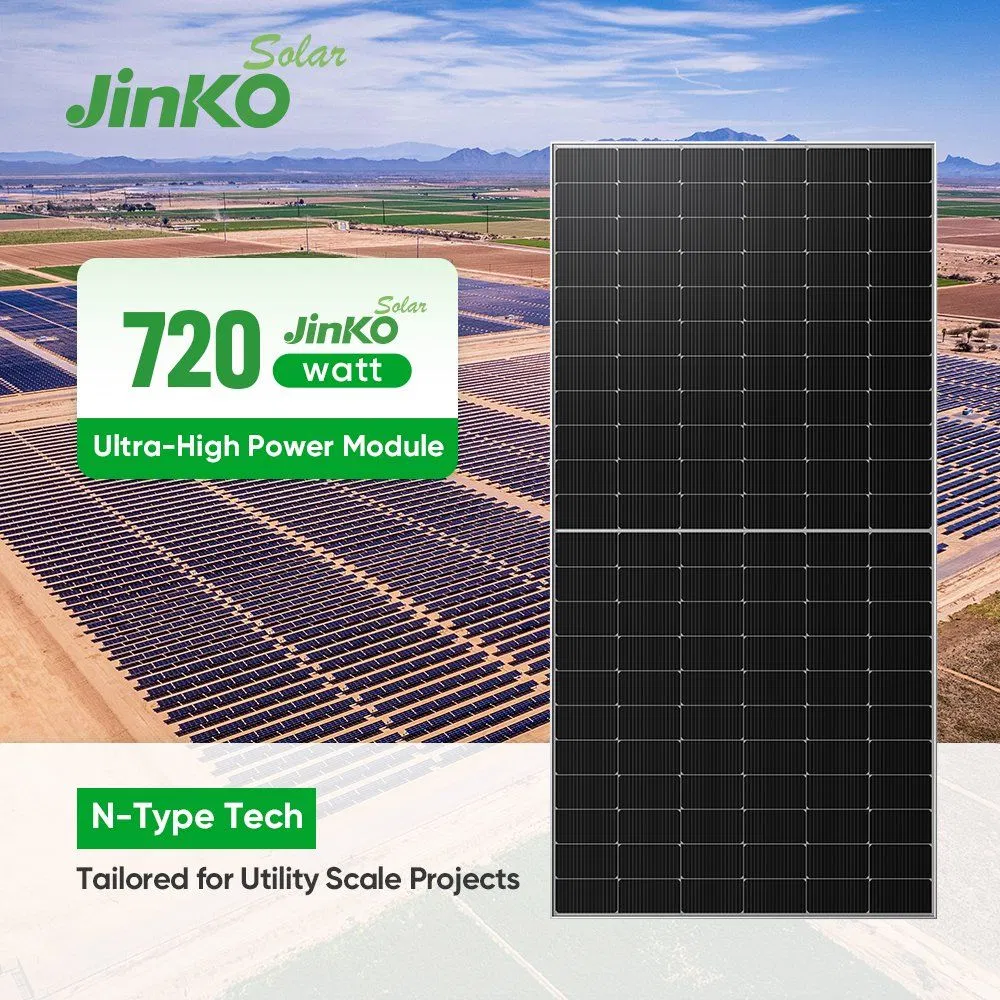
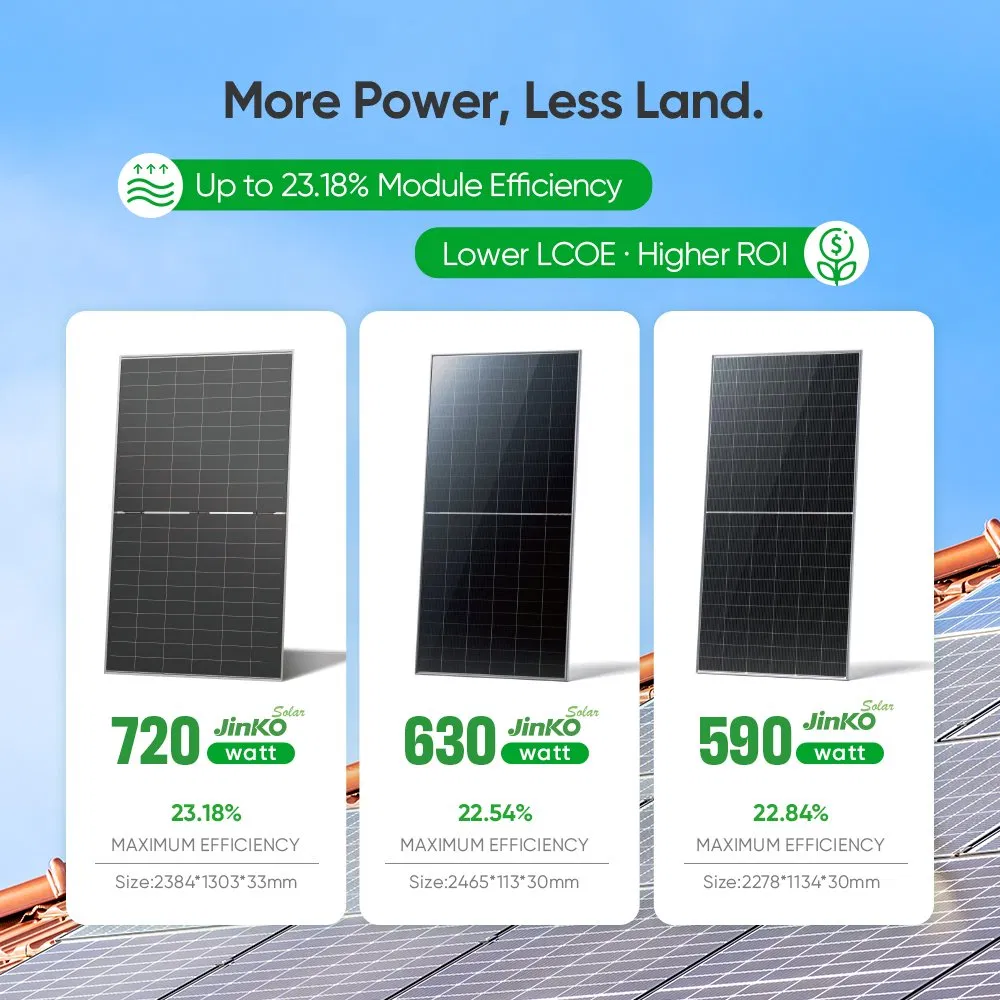
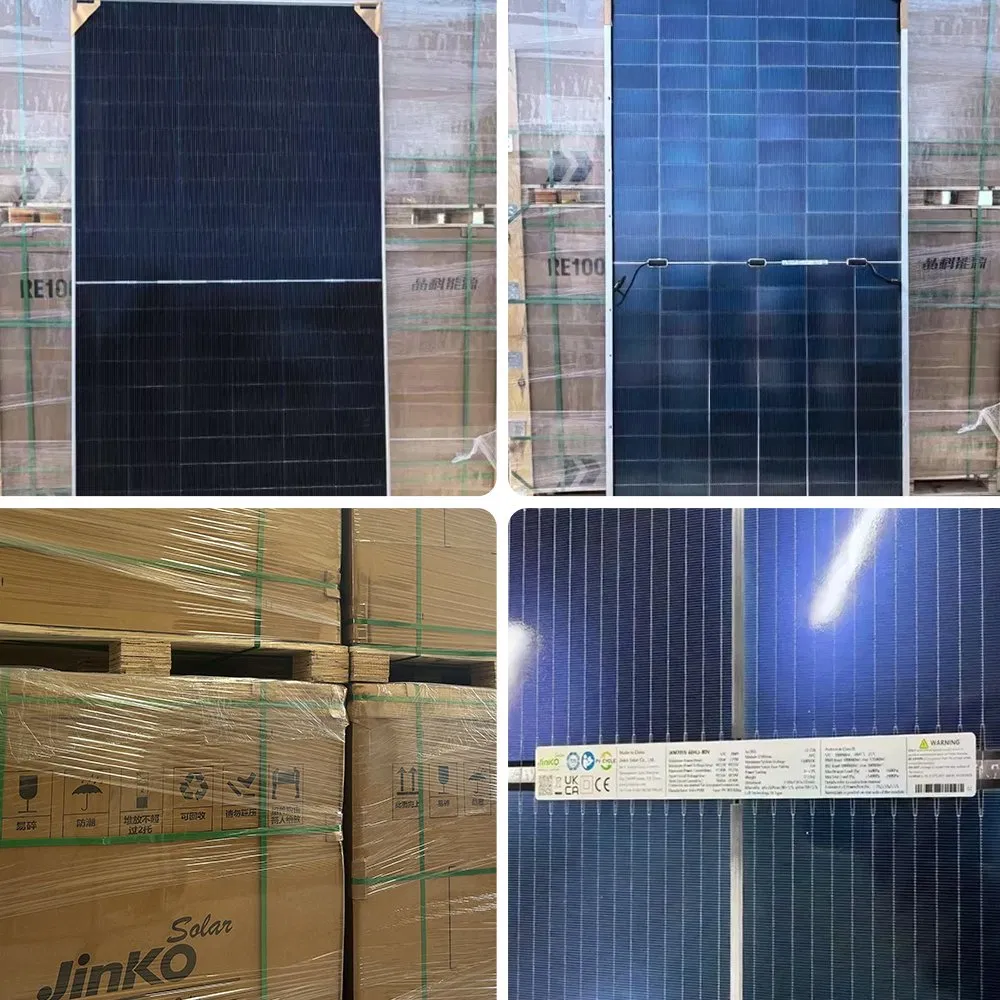
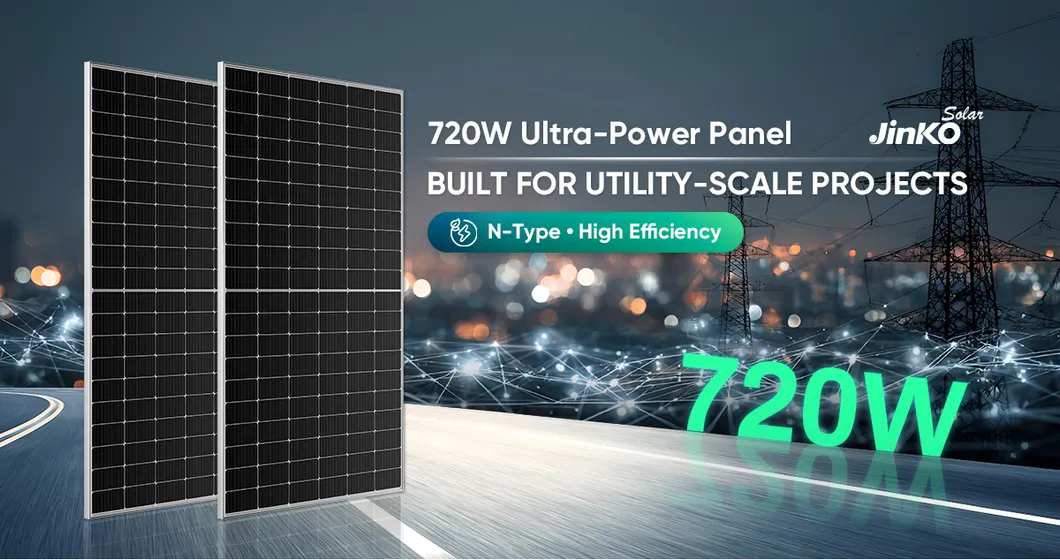
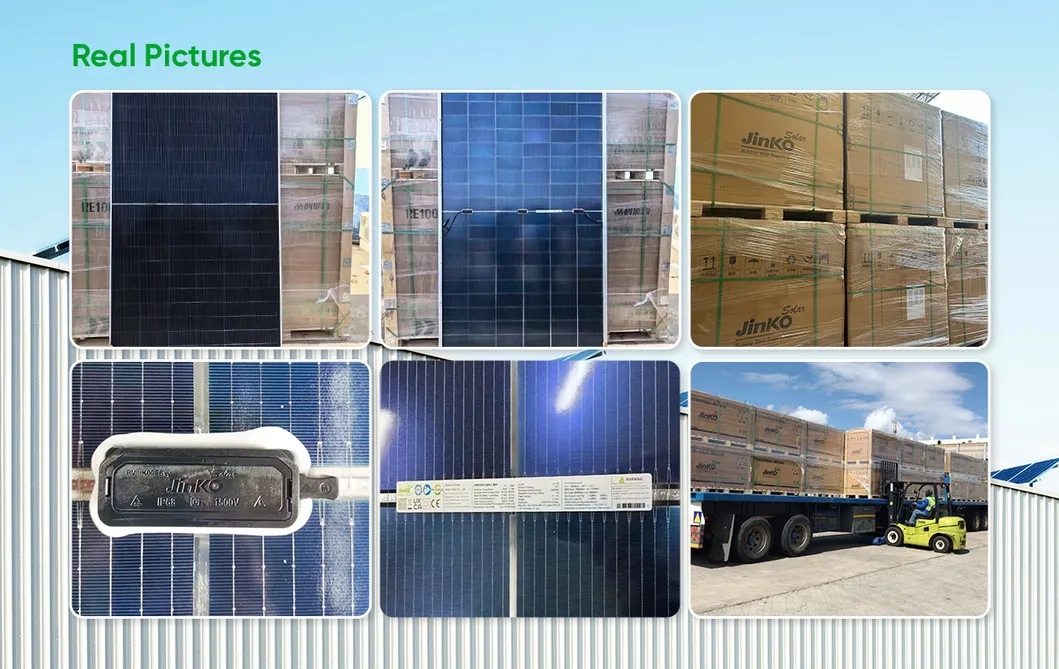
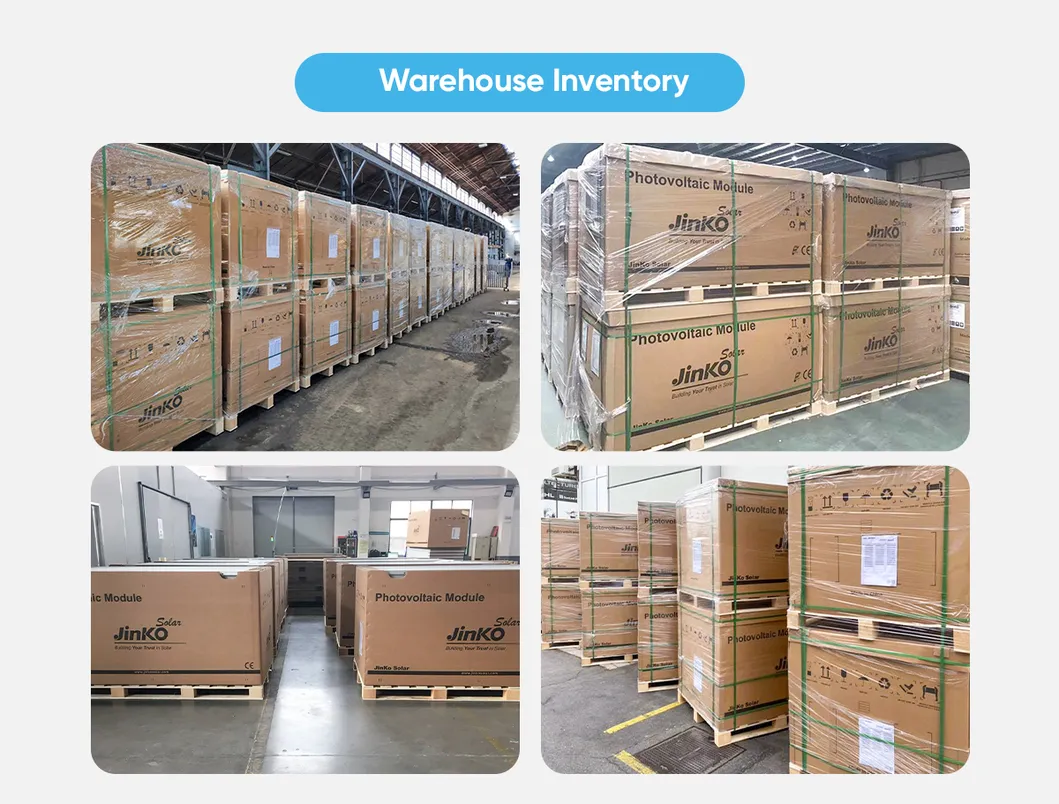
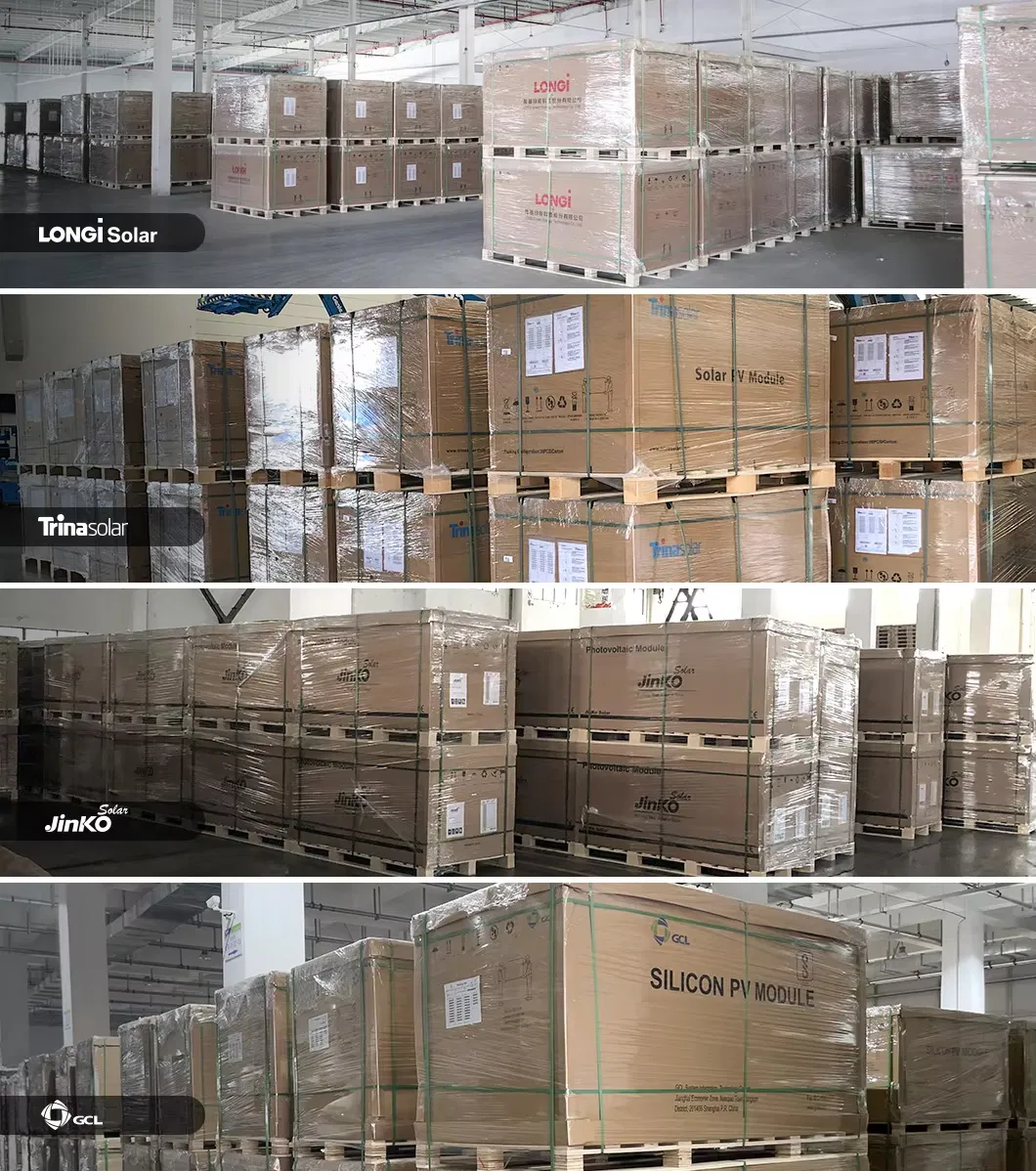
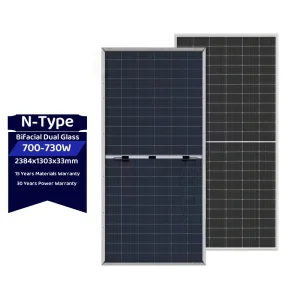
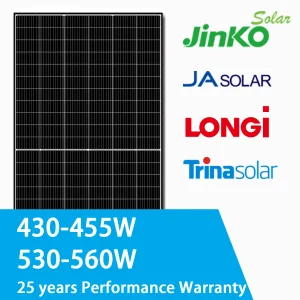
📷 Product Overview
ELECTRICAL DATA (STC)
Standard Test Conditions: Irradiance 1000W/m², Cell Temperature 25°C, Air Mass AM1.5. Measuring Tolerance: ±3%.
| Model Series |
Cell Type |
Wattage Range |
Dimensions |
Package Detail |
| Tiger Neo 54HL4-B |
N type mono 182mm |
395W - 430W |
1722×1134×30mm |
36pcs/pallet |
| Tiger Neo 60HL4-B |
N type mono 182mm |
460W - 480W |
1903×1134×30mm |
36pcs/pallet |
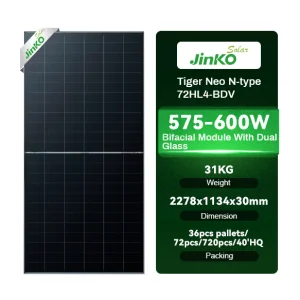
| Tiger Neo 72HL4-B |
N type mono 182mm |
550W - 575W |
2278×1134×35mm |
31-36pcs/pallet |
| Tiger Neo 78HL4-B |
N type mono 182mm |
595W - 615W |
2465×1134×35mm |
31pcs/pallet |
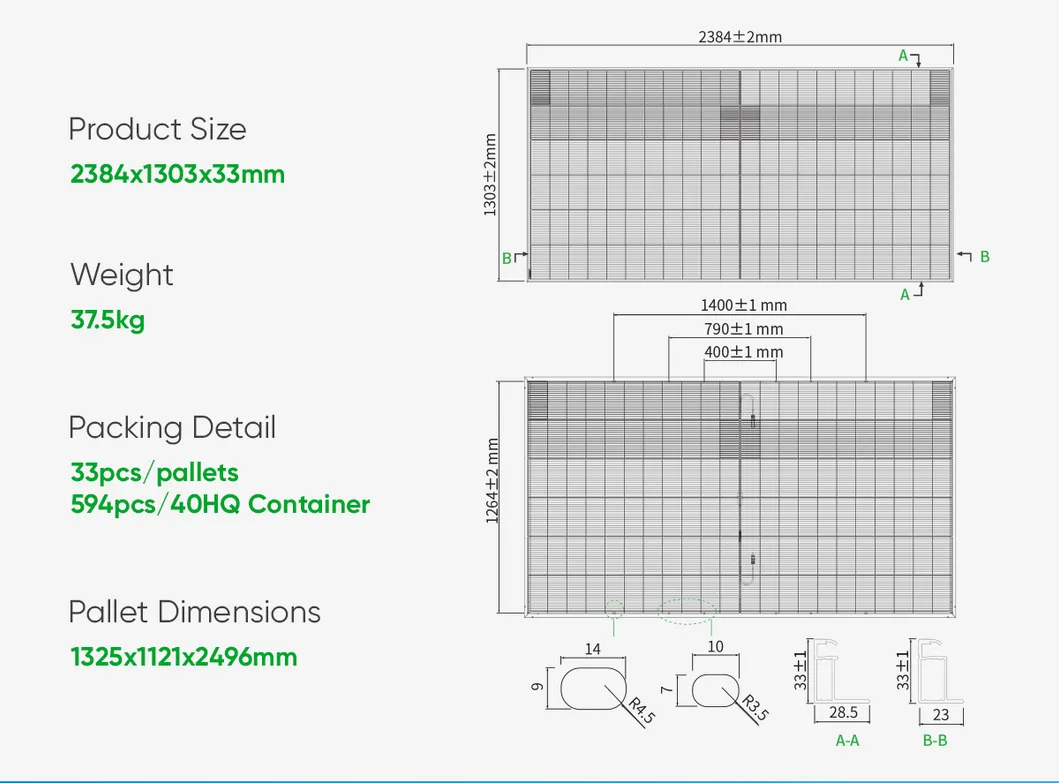
| Tiger Neo 66HL5-B |
N type mono 210mm |
710W - 735W |
2384x1303x33mm |
33pcs/pallet |
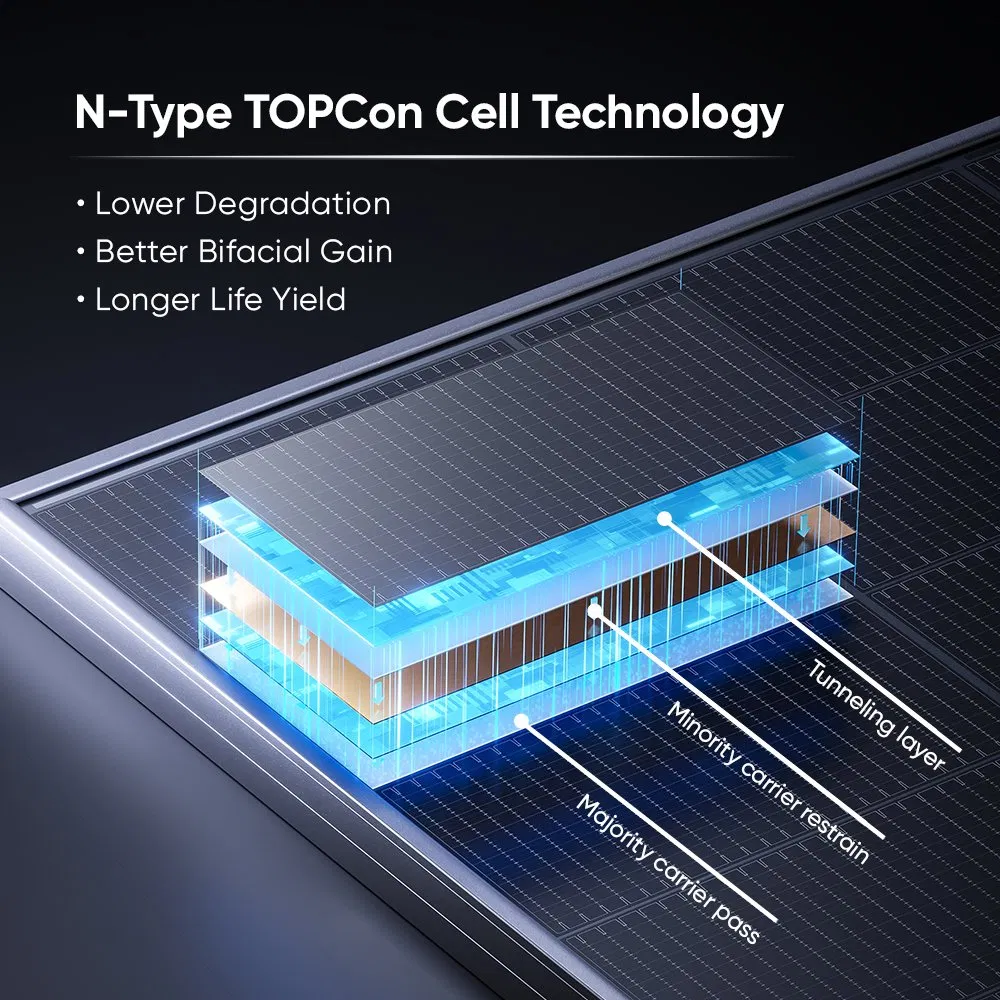
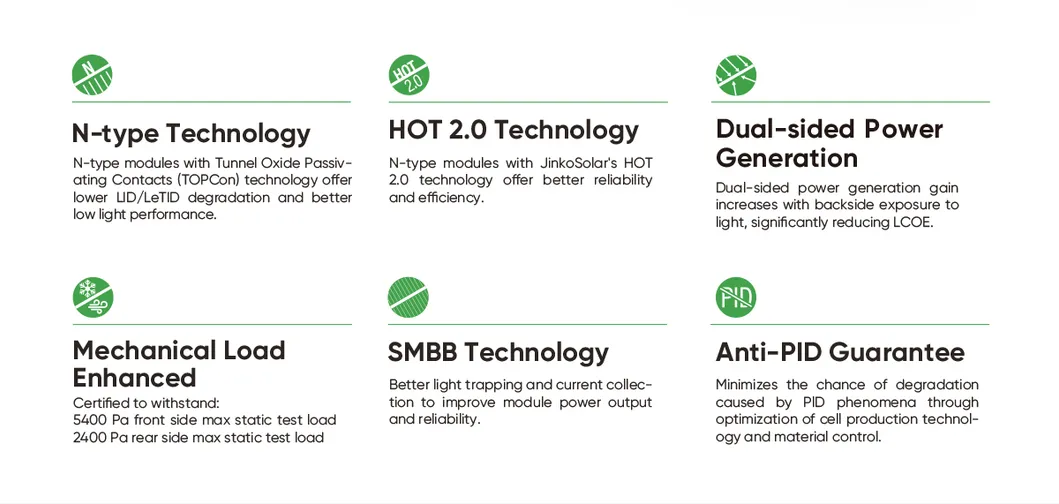
💡 N-Type Technology Advantage
Optimized Temperature Coefficient: -0.29%/ºC
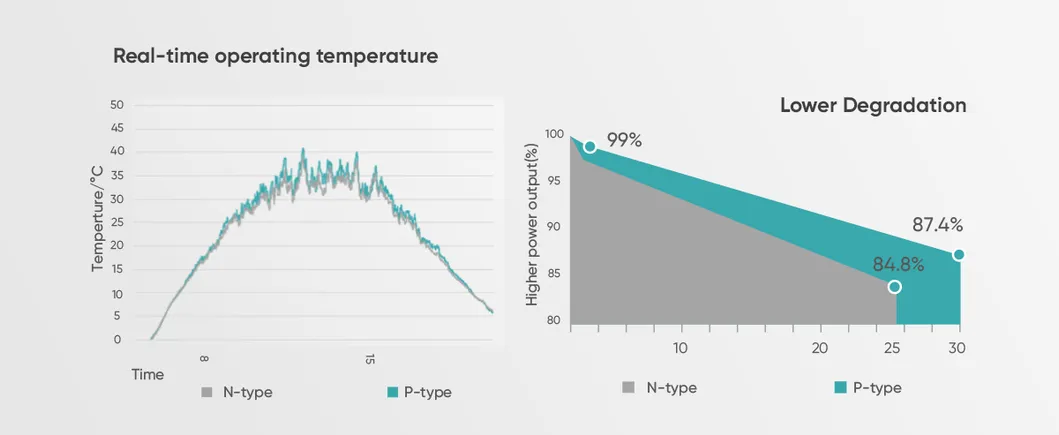
The temperature coefficient of P-type is -0.35%/ºC. Under high-temperature conditions, N-type modules can generate approximately 2% more power than traditional P-type modules.
🛡️ Performance Warranty
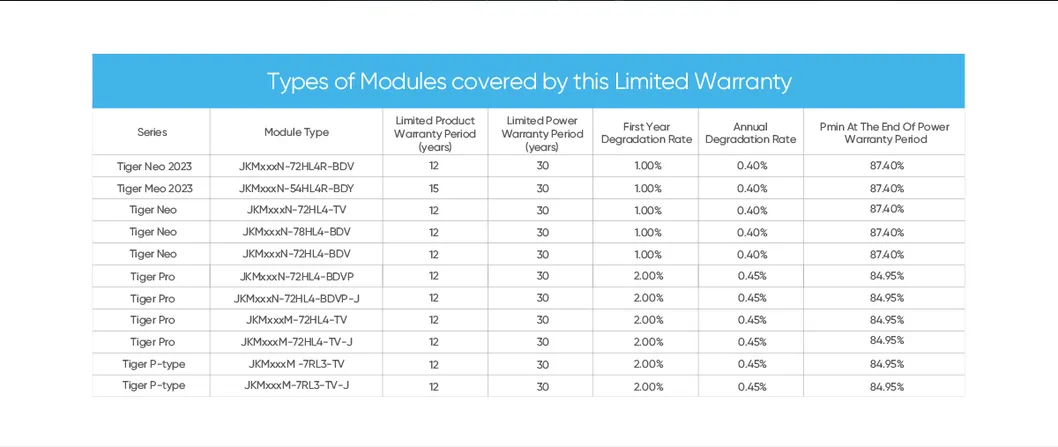
Warranties are provided to the original purchaser and successors for modules sold under agreements signed on or after April 1st, 2023. These modules feature industry-leading linear power degradation protection.
❓ Frequently Asked Questions
What is the advantage of N-type TOPCon technology?
N-type TOPCon modules offer higher efficiency, lower LID/LeTID degradation, and a better temperature coefficient, resulting in higher energy yield over the product's lifetime compared to P-type modules.
How does bifaciality improve energy production?
Bifacial modules capture sunlight from both the front and rear sides. Depending on the surface albedo (reflectivity), this can increase total energy generation by 5% to 25%.
Are these panels suitable for harsh environments?
Yes, these modules are certified to withstand high wind loads (2400Pa) and heavy snow loads (5400Pa), and the double-glass structure provides excellent durability against humidity and salt mist.
What is the system voltage capacity?
The modules are designed for a maximum system voltage of 1500 VDC, which allows for longer strings and reduced balance-of-system (BOS) costs in large-scale installations.
What is the degradation rate of these N-type modules?
N-type modules typically feature a lower first-year degradation (approx. 1%) and a lower annual degradation rate (approx. 0.4%) over 30 years compared to P-type modules.
What certifications do these modules hold?
The modules are fully certified by international standards including ISO, CE, TUV, and CB, ensuring safety, quality, and bankability for global projects.
 Stove Solar