Monocrystalline solar panels stand out in the renewable energy sector. Their efficiency is a crucial factor for many homeowners. According to Dr. Emily Green, a leading solar energy expert, "The purity of silicon in monocrystalline panels is what sets them apart." Her insights highlight why these panels are preferred for energy production.
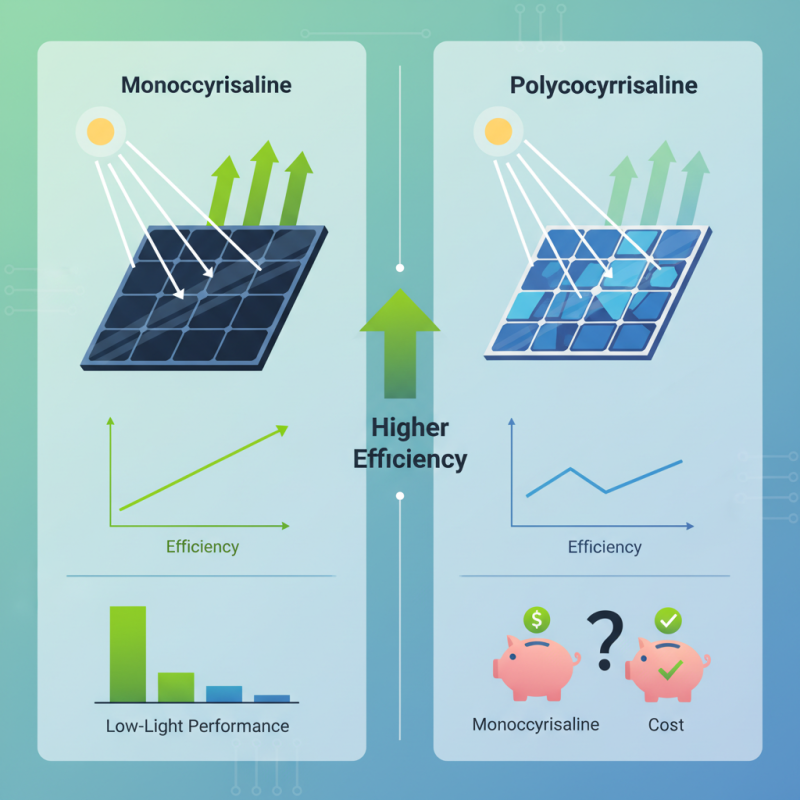
Why are monocrystalline panels more efficient? This question drives numerous discussions in the solar industry. These panels are made from a single crystal structure, enhancing their energy absorption capabilities. This design results in higher efficiency rates compared to polycrystalline panels. Additionally, monocrystalline panels perform better in low-light conditions.
However, it's essential to consider their cost. While they offer superior performance, they can be more expensive upfront. This investment requires careful planning and consideration of long-term energy savings. As the market evolves, new technologies might emerge, challenging the status quo of monocrystalline efficiency.
What are Monocrystalline Solar Panels and Their Structure?
Monocrystalline solar panels are recognized for their efficient design and substantial energy output. They consist of single-crystal silicon cells, which are formed from an uninterrupted crystal lattice structure. This unique structure allows electrons to flow more freely, resulting in higher energy conversion efficiency compared to polycrystalline panels. Typically, these panels have a sleek black appearance, adding aesthetic appeal to rooftops.
The manufacturing process of monocrystalline panels is intricate. Pure silicon is melted and formed into cylindrical ingots. These ingots are then sliced into thin wafers, each contributing to the panel's performance. However, this precision creates a higher cost in production, which may reflect in the pricing. Some debates arise about whether the efficiency justifies the expense, especially for budget-conscious consumers.
Monocrystalline panels perform excellently even under low light conditions. Their higher efficiency also means more energy generation per square meter. Still, it's crucial to weigh the advantages against installation costs. The decision ultimately hinges on individual energy needs and financial situations. The pursuit of renewable energy solutions is complex, requiring ongoing evaluation of various options.
Understanding the Efficiency Ratings and Performance Metrics of Solar Panels
Monocrystalline solar panels have gained a significant reputation for efficiency, often outperforming other types. Their efficiency ratings, typically between 15% to 22%, mean they convert more sunlight into usable electricity. This is due to their higher purity silicon, resulting in fewer defects. According to the National Renewable Energy Laboratory, monocrystalline panels can generate up to 20% more electricity than standard polycrystalline panels under the same conditions.
Performance metrics are crucial for assessing solar panels. The temperature coefficient, which indicates how much efficiency drops under high temperatures, is generally better in monocrystalline panels. For instance, a temperature coefficient of -0.3% to -0.4% per degree Celsius is common. This means less energy loss in hot climates, a critical factor for many installations.
However, it's essential to reflect on the higher production costs, potentially limiting access for some consumers. While the long-term savings on electricity bills can be significant, the initial investment remains a barrier. In addition, recent market trends indicate a growing interest in other technologies. This raises questions about future market dynamics and the sustainability of current efficiency advantages.
Comparative Analysis: Monocrystalline vs. Polycrystalline Solar Panels
Monocrystalline solar panels have gained popularity because of their higher efficiency compared to polycrystalline counterparts. A comparative analysis reveals that monocrystalline panels convert more sunlight into energy. Typically, these panels achieve efficiency rates of 15% to 22%, reflecting superior silicon purity. In contrast, polycrystalline panels usually range from 13% to 16% in efficiency. This difference means that monocrystalline panels are often the preferred choice for space-constrained installations.
Another key point of difference lies in temperature performance. Monocrystalline panels tend to maintain efficiency better in high temperatures. Studies show they can lose only 0.3% efficiency per degree Celsius rise, while polycrystalline panels can suffer a 0.5% drop. This can affect long-term energy production. Many users may overlook this detail when selecting panels.
Cost is an important factor. Monocrystalline panels generally have a higher upfront cost. They may take longer to pay off, which can be a disadvantage. However, their lifespan often exceeds 25 years with better warranties. Buyers should consider both initial investment and long-term savings. Balancing these factors requires careful thought.
Factors Influencing the Efficiency of Monocrystalline Solar Panels
Monocrystalline solar panels are known for their higher efficiency compared to other types. Several factors influence this efficiency. One significant aspect is the purity of silicon used in their production. Higher purity allows for better electron movement, resulting in increased energy conversion. These panels are typically crafted from a single crystal structure, enhancing their ability to absorb sunlight.
Temperature also plays a crucial role. Monocrystalline panels tend to perform better in warmer conditions, making them ideal for diverse climates. However, they are not immune to performance degradation over time. Inconsistent manufacturing processes can lead to variability in quality, affecting their long-term efficiency. The installation angle and orientation significantly impact sunlight exposure. A well-placed panel can maximize energy capture, yet poor positioning can hinder performance.
Additionally, shading impacts efficiency as well. Even partial shading can significantly reduce energy output. Some users may overlook this factor, which could lead to dissatisfaction with performance. Cleaning and maintenance may also be neglected, causing dirt accumulation that diminishes efficiency. It's essential to regularly maintain these systems to ensure optimal performance.
Recent Advances in Monocrystalline Technology and Future Trends
Recent advances in monocrystalline solar panel technology have set new benchmarks for efficiency. These panels now achieve conversion rates exceeding 22%, according to the National Renewable Energy Laboratory (NREL). Enhanced cell structures, like PERC (Passivated Emitter and Rear Cell), allow for better light absorption. This innovation leads to more power generation in limited space. It’s an impressive step forward in solar technology.
The future trends indicate ongoing improvements in manufacturing techniques. Researchers are exploring bifacial solar cells, which capture sunlight from both sides. This could increase energy output by an additional 10-20%. Such advancements are poised to transform energy systems around the world. However, companies face challenges like production costs and material scarcity.
Tips: When considering solar panels, prioritize efficiency ratings. Look for data from reputable sources. Keep an eye on trends in technology as they evolve. The energy landscape is shifting rapidly. Your choices today impact future generations.
FAQS
: Monocrystalline solar panels utilize single-crystal silicon cells for efficient energy output. They have a sleek black look.
Their uninterrupted silicon crystal lattice allows electrons to flow freely. This leads to higher energy conversion efficiency.
They are produced by melting pure silicon into ingots and slicing them into thin wafers. Precision increases production costs.
Yes, they maintain efficiency under low light conditions, generating more energy per square meter compared to alternatives.
Typical efficiency ratings range from 15% to 22%. Higher purity silicon results in fewer defects and better performance.
Monocrystalline panels have a better temperature coefficient, reducing energy loss in hot climates—critical for many users.
Innovations like PERC cell structures have increased conversion rates beyond 22%, allowing better light absorption and performance.
Bifacial solar cells are being researched, potentially increasing energy output by 10-20%. Challenges include production costs and material availability.
While long-term savings can be significant, initial costs may deter budget-conscious consumers. Reflecting on personal needs is essential.
Consider efficiency ratings from reliable sources and stay informed about technological trends. Decisions today affect future generations.
Conclusion
Monocrystalline solar panels are renowned for their high efficiency, primarily due to their uniform structure that allows for better electron movement. This article explores the reasons behind the efficiency of monocrystalline panels. It begins with an explanation of their composition and design, highlighting how these factors contribute to their superior performance. By analyzing efficiency ratings and performance metrics, the article sheds light on the scientific basis for their advantages over polycrystalline panels.
In addition to a comparative analysis, the article delves into the various factors influencing the efficiency of monocrystalline panels, such as temperature sensitivity and shading effects. It also discusses recent technological advances that have further enhanced their performance. Overall, understanding "Why are monocrystalline panels more efficient" provides valuable insights into the future trends of solar technology and its impact on renewable energy.

 Stove Solar