2026 Best Solar Panels How Weather Affects Performance?

Time:2026-10-05 Author:Oliver
0%

Choosing among the 2026 best solar panels requires more than comparing efficiency percentages. Weather can change daily output, payback periods, and long-term reliability. The central question is “How weather affects solar panel performance” in real conditions, not only inside a laboratory.

Industry evidence makes the issue measurable. The IEA PVPS Trends 2024 report recorded about 456 gigawatts of new photovoltaic capacity installed worldwide during 2023. That scale makes dependable performance increasingly important. NREL’s PVWatts documentation shows that crystalline-silicon modules commonly lose around 0.3% to 0.5% of power for every degree Celsius above the 25°C test temperature. A panel on a dark roof can therefore produce less power under intense summer sunlight, even when the sky is perfectly clear. Cold weather usually improves electrical efficiency, but snow, frost, and short winter days can reduce total energy production.

Cloud cover, rain, dust, humidity, wind, and hail create different risks. Light rain may clean dust from glass, while heavy storms can bring debris or shading. Snow is more complicated. A steep panel may shed it quickly; a shallow panel may remain blocked for hours. Field conditions are untidy. Models can miss them.

NREL, IEA PVPS, and Fraunhofer ISE provide valuable benchmarks, yet local measurements remain essential. Compare temperature coefficients, degradation warranties, hail ratings, mounting design, and installer experience. I would not choose a “best” panel from efficiency alone. A slightly less efficient module may perform better on a hot, dusty roof with limited maintenance access. That practical detail often matters more than a polished datasheet.
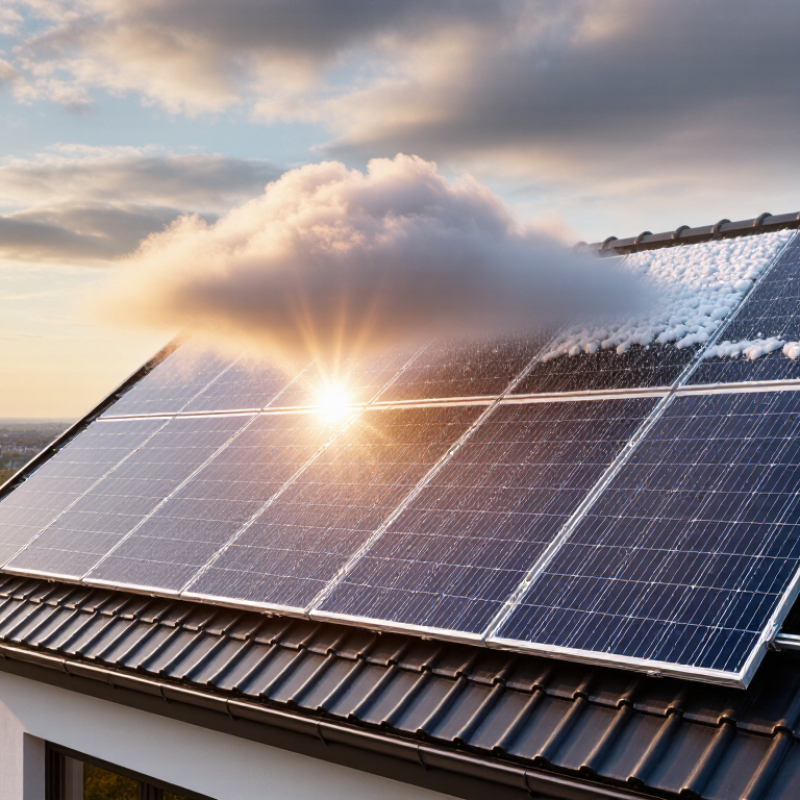
2026 Best Solar Panels How Weather Affects Performance?

Solar Panel Performance Basics in Different Weather Conditions

Solar panel performance begins with sunlight, not air temperature. The NREL PVWatts documentation uses a typical temperature coefficient of about −0.4% per degree Celsius above 25°C. A panel at 45°C may therefore lose roughly 8% of its rated power. Clear, hot afternoons can produce less electricity than cooler mornings. Wind helps by cooling the module surface. It does not remove every thermal loss.

Clouds reduce direct sunlight, but panels still use diffuse light. Output may fall sharply under thick storm clouds. Light overcast conditions can still generate useful power. According to the IEA PVPS Task 13 report, annual energy estimates must account for local irradiance, temperature, snow, and soiling. Weather records matter more than a single laboratory rating. Real roofs are messier.

Rain can wash away loose dust, yet dried droplets may leave mineral deposits. Soiling losses commonly reach several percent annually, depending on climate and cleaning practices. Snow is different. A thin layer blocks light almost completely, while steep mounting angles can encourage sliding. The National Renewable Energy Laboratory notes that snow losses vary widely by site and tilt. A small mistake remains possible: nearby trees, wind-blown dust, and short cloud events can escape simplified models. When comparing panels in 2026, check temperature coefficients, mechanical-load ratings, and local weather data, not only peak wattage.

2026 Best Solar Panels: How Weather Affects Performance? — Solar Panel Performance Basics in Different Weather Conditions
Weather Condition Typical Solar Resource Main Effect on Panel Output Typical Relative Output* Important Technical Data Performance Considerations Recommended Action
Clear, cool, sunny conditions Strong direct sunlight; commonly close to the reference test irradiance of 1,000 W/m² High energy production with efficient voltage and current performance 90–100% Panel ratings are generally measured at 25°C cell temperature and 1,000 W/m² irradiance This is usually the most favorable combination of sunlight and operating temperature Keep the array unshaded and allow airflow beneath the modules
Clear, hot weather Strong direct sunlight, often with high irradiance Output falls as cell temperature rises above the rating temperature 75–95% Typical crystalline-silicon temperature coefficients are about −0.3% to −0.5% per °C for power A cell operating 25°C above its rated temperature may lose approximately 7.5–12.5% of power Use adequate rear ventilation and avoid mounting directly against a solid roof surface
Partly cloudy conditions A mix of direct and diffuse sunlight Production changes as clouds pass; brief peaks can occur at cloud edges 40–90% Short-term irradiance can change rapidly, causing variable power output Daily energy depends on cloud duration, thickness, sun angle, and array orientation Use an appropriately sized inverter and avoid avoidable shade across part of the array
Overcast sky Mostly diffuse sunlight; direct sunlight is greatly reduced Lower current and lower total energy production, but panels continue generating electricity 10–40% Actual irradiance can be far below the 1,000 W/m² rating condition Low-light performance varies by module design, system voltage, and inverter operating range Evaluate annual and winter solar data rather than judging performance from one cloudy day
Light rain Reduced direct and diffuse sunlight Lower output mainly because rain clouds block sunlight 10–40% Rain itself does not normally damage properly installed modules; electrical equipment must remain sealed Rain may remove loose dust and pollen, but it cannot compensate for low irradiance Maintain intact cable connectors, seals, and drainage paths
Heavy rain or storm clouds Very low or rapidly changing irradiance Short-term energy production can become minimal 0–20% Lightning, flooding, and wind create greater system risks than rainfall alone The array may shut down temporarily if grid protection or inverter safety functions activate Use compliant grounding, surge protection, waterproof connectors, and professional inspection after severe storms
Cold, sunny weather Strong sunlight when skies are clear Cooler cells generally improve voltage and power output 95–110% Power typically increases by approximately 0.3–0.5% for each °C that cell temperature is below 25°C Cold conditions are beneficial only when snow, frost, or cloud cover does not block sunlight Check the system voltage range because cold temperatures can increase open-circuit voltage
Light frost or thin ice Sunlight is partially reduced or scattered Temporary reduction until the surface clears 30–90% The effect depends on coverage, thickness, panel angle, and morning sunlight Dark module surfaces may warm and clear frost naturally, but not always quickly Do not scrape the glass with hard tools; allow safe natural melting where possible
Light snow cover Sunlight is partly blocked Output may fall substantially until snow slides or melts 10–60% A steep tilt and smooth glass can help snow shed, but performance is site-dependent Partial obstruction can reduce the output of an affected electrical section Follow the installation manual; use only approved soft tools and safe access procedures
Heavy, opaque snow cover Sunlight is almost completely blocked Little or no energy production while the module surface is covered 0–10% The duration of the loss depends on snowfall, tilt, temperature, and wind Snow-related annual losses can be modest or significant depending on climate and array design Never walk on modules; arrange safe professional snow removal when necessary
Strong wind with clear skies Solar resource may remain high Wind can cool the panels and partly offset heat-related losses 90–105% Cooling benefits depend on wind speed, mounting clearance, and local air temperature Mechanical loading from gusts is more important than the electrical cooling benefit Use wind-rated racking, correct fasteners, and a design appropriate for the site wind zone
Haze, dust, or wildfire smoke Direct sunlight is scattered and absorbed by airborne particles Reduced irradiance lowers current and daily energy yield 20–80% The impact varies widely with particle concentration, sky visibility, and duration Particles can also settle on the glass and create soiling losses after the air clears Monitor energy trends and clean the modules when inspection confirms persistent soiling
Salt air or high humidity Solar resource depends mainly on cloud cover and atmospheric clarity Humidity usually has a smaller immediate effect than clouds, but salt and moisture can affect durability 70–100% Corrosive coastal environments require suitable materials, sealed connectors, and compatible mounting hardware Surface salt deposits and condensation may increase soiling or corrosion risk over time Use corrosion-resistant hardware and inspect frames, cable connections, and grounding periodically
*Interpretation of relative output: The percentages are practical planning ranges for a typical grid-connected crystalline-silicon photovoltaic system compared with output near its rated conditions. Actual results vary with irradiance, panel temperature, orientation, tilt, shading, snow depth, inverter limits, air quality, and system design. Panel power ratings are commonly specified at 1,000 W/m² irradiance, 25°C cell temperature, and a defined solar spectrum; they are not guaranteed production levels in every weather condition.

How Temperature Changes Solar Panel Efficiency in 2026

How Temperature Changes Solar Panel Efficiency in 2026

Solar panels usually perform best when their cells are cool, not simply when the sun feels warm. Standard ratings are measured near 25°C cell temperature, while a rooftop can become much hotter. For many panels, output drops about 0.3% to 0.5% for every degree above that point. A bright 35°C afternoon may therefore produce less power than a crisp 15°C morning. This seems surprising, but voltage declines as heat builds inside the cells. Wind can reduce that stress by carrying heat away. Cloud cover lowers sunlight, yet cooler cells may partly offset the loss.

Tips: Leave airflow beneath rooftop panels when possible. Avoid placing equipment directly against their rear surface. Check the temperature coefficient on the technical datasheet, not only the headline efficiency. Monitor output beside local weather readings for several weeks.

Cold weather can improve efficiency, although short winter days still reduce daily energy. Snow creates a different problem. A thin layer blocks light, while clean, reflective snow near tilted panels may increase brightness after removal. Safe maintenance matters more than chasing every small gain.

My own field checks often show uneven results across one roof. One section may stay cooler because of afternoon wind or nearby shade. Another may run hot beside dark roofing. I would not promise an exact annual loss without site measurements, because roof design, ventilation, dust, and inverter limits also matter. Temperature is important, but it is only one part of real-world performance.

2026 Best Solar Panels: How Weather Affects Performance

How Temperature Changes Solar Panel Efficiency in 2026

This chart uses a representative crystalline-silicon module temperature coefficient of −0.40% per °C relative to the standard test temperature of 25°C. Cooler cells generally produce more power, while heat reduces voltage and overall efficiency. Actual output also depends on sunlight intensity, wind, shading, snow, and installation conditions.

Values show relative efficiency under the same sunlight conditions and are calculated from the 25°C reference point.

The Effects of Rain, Snow, Clouds, and Humidity on Solar Output

2026 Best Solar Panels: How Weather Affects Performance?

Rain can sharply reduce solar output because thick clouds block direct sunlight. Light showers may still allow useful diffuse light to reach the cells. Rain also washes away dust, pollen, and bird residue from the surface. That cleaning effect can improve production after the clouds clear. A common mistake is treating every rainy day as a total loss.

Snow changes everything. A heavy layer can block sunlight almost completely until it slides away or is removed safely. Panels installed at steeper angles often shed snow sooner. Fresh snow around the array can reflect light upward and temporarily increase production. Wet, compacted snow is less helpful. It may stay longer and add structural weight.

Cloud cover causes uneven results. Thin clouds can lower output modestly, while dark storm clouds may reduce it dramatically. Brief edge-of-cloud flashes can create unusual production spikes. High humidity usually affects performance indirectly through haze, moisture, and hotter operating conditions. Heat can reduce panel efficiency, even when sunlight appears strong. I once assumed humidity mattered less than temperature; the data is more complicated. Compare hourly output with weather records, not daily totals alone. A professional assessment should also examine roof angle, ventilation, shading, and local snowfall patterns. Humid air can hide weak sunlight from casual observation.

Wind, Storms, and Hail: Weather Risks for Solar Panels

2026 Best Solar Panels: How Weather Affects Performance?

Wind can stress solar panels long before visible damage appears. Strong gusts lift loose roofing materials, while pressure changes affect mounting points and frames. Panels installed near roof edges often face greater wind loads. A qualified installer should use local wind data, secure fasteners correctly, and inspect the roof before installation. Small gaps around mounts can become serious problems during repeated storms.

Hail is another risk. Modern panels undergo impact testing, but no panel is hail-proof. Large hail can crack glass, damage cells, and create hidden electrical faults. After a severe storm, look for fractures, cloudy areas, loose cables, or sudden power loss. Do not walk on the panels. A trained technician can use thermal imaging and electrical tests to find damage that looks invisible.

Storms also bring lightning, flooding, and flying debris. Surge protection and proper grounding may reduce electrical risks, but they cannot prevent every failure. Independent test results and local building-code compliance offer useful evidence when comparing panels. Still, ratings do not replace careful installation. Field conditions are messy, and even good planning can miss a weak roof section or an aging seal. Regular inspections matter more after extreme weather.

Choosing the Best Solar Panels for Local Climate Conditions

In 2026, the best solar panels will depend on local climate, not efficiency alone. A panel in Arizona faces intense heat, while one in Minnesota must handle snow, frost, and shorter winter days. The NREL System Advisor Model reports that crystalline-silicon panels typically lose about 0.3% to 0.5% of power for every degree above 25°C. A cooler panel can therefore produce more energy during hot afternoons.

Rain and clouds also matter. The IEA Photovoltaic Power Systems Programme notes that local irradiation strongly affects annual solar output. Coastal regions need corrosion-resistant frames and secure mounting. High-wind areas require stronger load ratings. Snowy regions may benefit from steep mounting angles and panels with smooth surfaces. Bifacial panels can gain extra energy from bright snow, but the result depends on ground reflectivity and installation height. I would not trust a single annual yield estimate. Weather patterns change, sometimes sharply.

Tips: Check the panel’s temperature coefficient, snow load, wind load, and low-light performance. Use long-term data from the Global Solar Atlas and local weather records. Ask an installer to model shade, snowfall, heat, and roof direction. One detail is easy to miss: cleaning needs rise near farms, roads, and dusty construction sites. That small maintenance burden can quietly reduce real-world output.

FAQS

Do solar panels produce less electricity on hot days?

Usually, yes. Output often falls 0.3% to 0.5% for each degree above 25°C. A 45°C panel may lose roughly 8%. Cooler mornings can outperform bright afternoons. Real roofs are messy.

Can cold weather improve solar panel efficiency?

Cold cells usually convert sunlight more efficiently. However, short winter days may reduce total daily energy. Frost, shade, and low sun angles still matter.

How much power do clouds remove?

Light clouds reduce direct sunlight but allow diffuse light through. Thick storm clouds can cut output sharply. Light overcast skies may still provide useful electricity. Cloud timing is easy to underestimate.

Does rain clean solar panels completely?

Rain can remove loose dust from the glass. Dried droplets may leave mineral spots behind. Near roads, farms, or construction, cleaning needs may increase. The glass may look clean but perform poorly.

How does snow affect solar panel production?

A thin snow layer can block most sunlight. Steep panels may shed snow more easily. Bright snow can reflect extra light after removal. Safe maintenance matters more than chasing tiny gains.

Which panel features matter in hot climates?

Check the temperature coefficient, ventilation, and mounting design. Leave airflow beneath rooftop panels when possible. Avoid pressing equipment against the rear surface. Peak wattage alone tells an incomplete story.

What should panels withstand in snowy or windy regions?

Review certified snow-load and wind-load ratings. Steeper mounting angles may help snow slide away. Coastal areas also need corrosion-resistant frames and secure mounting. One rating cannot describe every roof.

Can nearby shade change performance across one roof?

Yes. One roof section may stay cooler in afternoon wind. Another may run hot beside dark roofing. Trees, dust, and short cloud events can escape simple models. Measure before promising.

Conclusion

How weather affects solar panel performance is a key consideration when selecting and maintaining a solar energy system in 2026. Solar panels generally produce the most electricity under bright, cool conditions, while excessive heat can reduce efficiency even when sunlight is strong. Clouds and rain lower solar output, although panels can still generate power from diffused light. Rain may also wash away dust, while snow can block sunlight until it slides off or is removed safely. High humidity can contribute to moisture-related wear over time, making proper installation and ventilation important.

Wind usually has little effect on daily production, but strong storms and hail can test a panel’s structural durability. Homeowners should consider local temperature ranges, rainfall, snowfall, wind exposure, and storm frequency when choosing a system. Selecting panels with suitable durability, installation angles, protective features, and reliable maintenance practices can help ensure steady performance across changing weather conditions.

Oliver

Oliver

Oliver is a seasoned marketing professional with a wealth of expertise in driving brand awareness and engagement. With a deep understanding of our company's product offerings, he consistently delivers high-quality content that enriches our professional blog. His insights not only shed light on......